Motorized Operation
Automating a garage door transforms it from a manually operated physical barrier into a convenient, remote-controlled mechanical system. For daily vehicle access, particularly in poor weather conditions across Sheffield, automation removes the necessity to physically exit a vehicle to open or secure the garage. The underlying technology typically involves an electric motor system tailored to the specific geometry of the door.
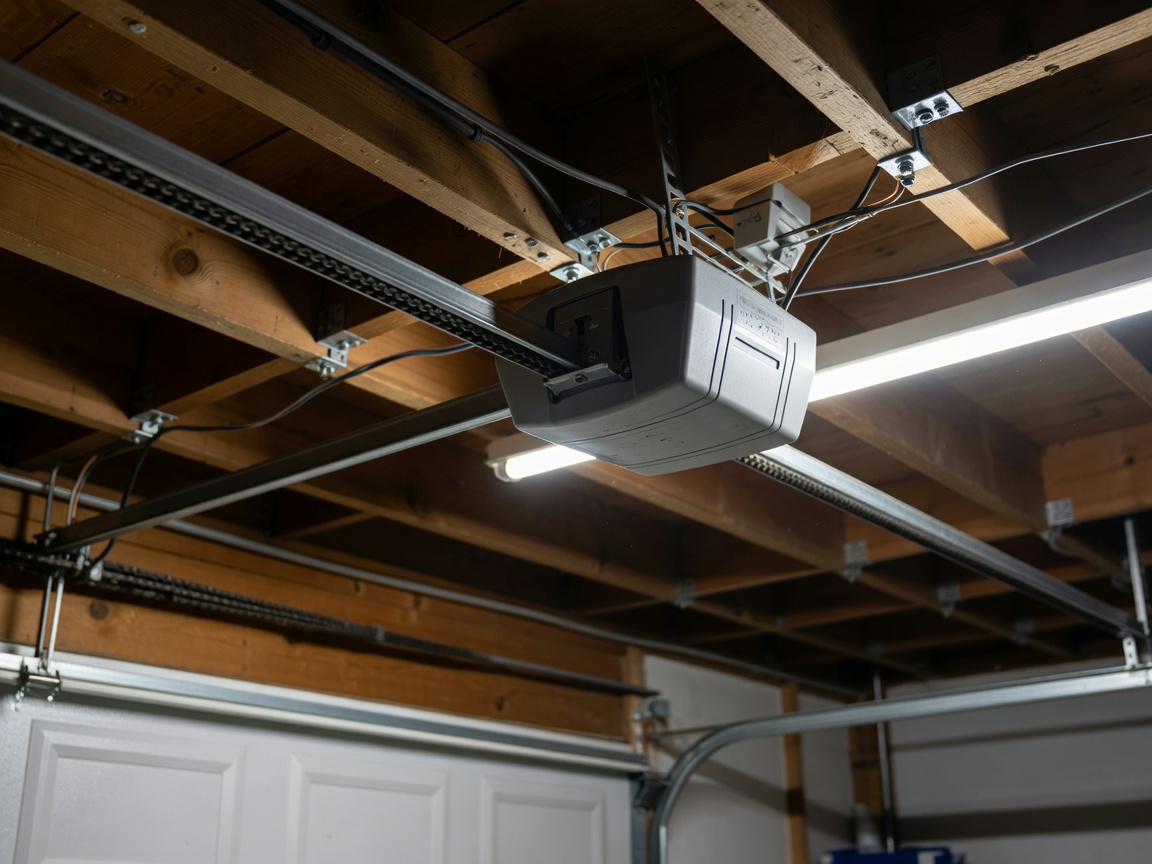
For sectional and retractable up-and-over doors, automation usually comprises a ceiling-mounted motor unit linked to a rigid boom housing a chain or a quiet Kevlar belt, which physically pulls the door along its tracks. For roller doors, the motor is typically a tubular design concealed entirely within the curtain's winding barrel.
Control Systems
Modern automated systems offer versatile control methods. Remote control handsets remain the standard method for vehicle access. Additionally, wall-mounted push-buttons can be installed inside the garage for pedestrian operation. Some advanced systems allow for integration with home automation networks or operate via secure digital keypads mounted externally, facilitating access without physical keys or remotes.
Critical Safety Considerations
Because an automated door is a heavy, powered mechanical device, safety is paramount. Any powered system installed must operate safely and reliably. Built-in force-limitation is a standard feature; the motor must monitor resistance and automatically stop or reverse if the descending door encounters an unexpected physical obstruction (such as a vehicle bumper or a person).
In many installations, secondary safety systems such as photoelectric cells (light beams) are highly recommended or structurally necessary. These are mounted low across the door opening; if the beam is broken during closing, the motor immediately halts and reverses, preventing physical contact entirely. Powered doors should be treated as safety-critical equipment, and property owners must ensure the surrounding area is clear before operating the system remotely.
Power Requirements and Manual Overrides
Automation requires a dedicated electrical supply. Planning for an automated installation requires ensuring a standard electrical socket is appropriately positioned—typically on the ceiling near the motor head for overhead track systems, or high on a side wall for roller systems.
A crucial consideration in any automation project is the provision for power failures. If the electrical supply is interrupted, the door must still be operable. Motors feature a manual release mechanism (often a pull-cord) that disconnects the drive linkage, allowing the door to be moved manually. If the garage has no secondary access door, this release mechanism must be securely routed to an external lock barrel, allowing entry from the outside during a power cut.
Automation Planning and Inspection
Before automating an existing manual door, the door mechanism itself must be mechanically sound. A motor is designed to drive a properly balanced door; it is not a remedy for a heavy door with failing springs or damaged tracking. Routine inspection of the physical balance, tracking alignment, and the sensitivity of the safety auto-reverse functions is an essential part of owning an automated garage door system.